
Will Your US Halal Certificate Be Accepted Abroad?
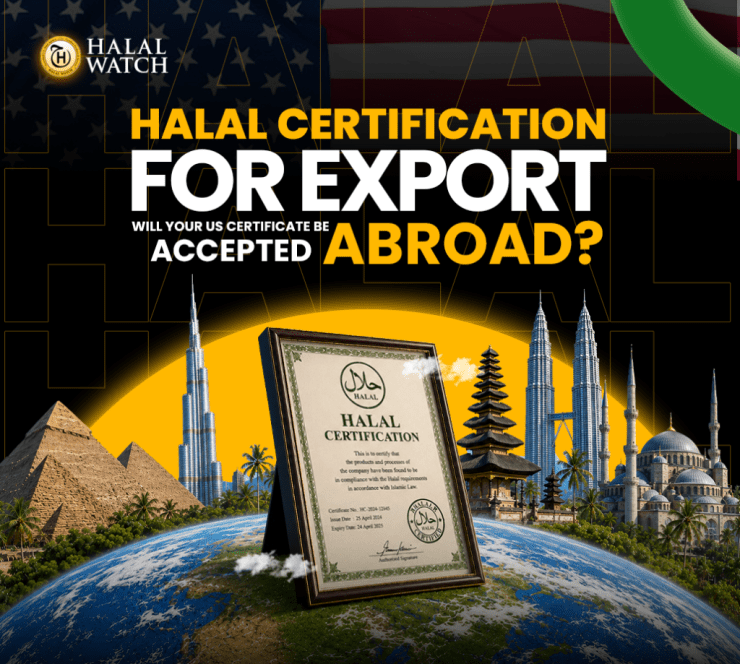
We’ve seen companies spend months getting certified, only to discover at the port that their certificate isn’t recognized. Before you pick a certifier, see our full guide to Halal Certification For Export and which accreditations each market accepts.
Consider a scenario that plays out far too often in this industry. A food manufacturer in Ohio spends months getting halal certified. The audit goes smoothly. The certificate looks official. The halal logo goes on the packaging. Then the first export order ships to Kuala Lumpur, and Malaysian customs holds the container because the certifying body is not on Malaysia’s approved list.
The product was compliant. The certificate was genuine. It simply did not count where it needed to count.
It almost always traces back to one misunderstanding: the belief that a halal certificate is a halal certificate. It is not. In international trade, your certificate is only worth what the importing country says it is worth. This guide explains how that system works, which authorities control access to which markets, and how to set up your certification so it opens borders instead of closing them.
There is no universal halal certificate. Each importing country maintains its own list of foreign certification bodies it accepts, and your certificate is only valid where your certifier is recognized.
The schemes that matter most for US food exporters are MS 1500 for Malaysia (JAKIM), the Indonesian Halal Assurance System for Indonesia (BPJPH), and GSO and UAE.S 2055 standards for the Gulf states through the GCC Accreditation Center.
Choose your export markets first, check their recognized scheme requirements second, and select a certification body third. Doing it in reverse is the most expensive mistake in halal trade.
Export grade certification audits are stricter than domestic ones, covering tighter ingredient thresholds, destination specific slaughter positions and deeper supply chain traceability.
Verifying a certifier’s coverage takes about twenty minutes using public scheme lists, and it can save a six figure shipment.
There Is No Global Halal Certificate
Halal certification has no single worldwide authority. Every major Muslim majority market runs its own system for deciding which foreign schemes and certification bodies it trusts. Malaysia keeps a list. Indonesia keeps a list. The Gulf states keep lists. If the body that certified your facility is not recognized for your destination country, your shipment is legally uncertified the moment it reaches that border, no matter what your paperwork says.
Why do these lists exist? Because importing countries cannot send inspectors to audit every foreign factory. Instead, they audit the schemes and the certifiers. When an authority like Malaysia’s JAKIM recognizes a certification body, it is saying: we have reviewed this organization’s standards, examined how it trains auditors, checked how it monitors certified facilities, and we accept its certificates as if we had issued them ourselves.
That recognition is the actual product you are buying when you pay for certification. The certificate is just the receipt.
Halal Certification Recognition Bodies: JAKIM, BPJPH, GAC and SFDA
Malaysia: JAKIM
The Department of Islamic Development Malaysia, known as JAKIM, maintains the MS 1500 halal standard and its Manual Procedure for Halal Certification Malaysia, and publishes a list of recognized foreign halal certification bodies. Only certificates aligned with its requirements are accepted for products entering Malaysia.
MS 1500 matters beyond Malaysia’s own borders. It is among the oldest and most detailed halal standards in the world, and several other markets treat alignment with it as a signal of certifier credibility. When you evaluate a certifier for the Malaysian market, MS 1500 alignment is the baseline to look for.
Indonesia: BPJPH
Indonesia changed the game for exporters when its mandatory halal law came into full effect. Food and beverage products entering Indonesia now require halal certification, and imported goods must be certified against the Indonesian Halal Assurance System administered by BPJPH, the government agency responsible for halal product assurance.
With more than 230 million Muslim consumers, Indonesia is the largest halal food market on the planet. For most American food and beverage exporters, Indonesia coverage is the single most commercially important box a certifier can check. It is also the coverage most frequently missing from smaller US certifiers.
The Gulf: GAC, SFDA and National Authorities
The Gulf Cooperation Council states coordinate through the GCC Accreditation Center, which accredits halal certification bodies against GSO standards for the region, including the GSO 2055 series for halal products. On top of that regional layer, individual countries add their own requirements. Saudi Arabia routes food import approvals through the Saudi Food and Drug Authority. The United Arab Emirates maintains its own framework built on the UAE.S 2055 series through its standardization authority.
Gulf shipments also come with a procedural detail that surprises first time exporters: many consignments require a halal certificate issued per shipment, in a prescribed format, in addition to your annual facility certificate. A certifier experienced with GCC trade handles this as routine paperwork. One that is not can leave your freight forwarder scrambling at the port.
Singapore recognizes foreign certifiers through MUIS. Thailand works through CICOT. Pakistan, Turkey, South Africa and others maintain their own frameworks. None of these may matter to you today. The question is whether any of them will matter within three years, because switching certifiers later means paying for the entire audit cycle again.
Halal Certificate Recognition at a Glance
| Export market | Recognition authority | Governing scheme | What it means for your shipment |
| Malaysia | JAKIM | MS 1500 / Manual Procedure | Certifier must align with MS 1500 and appear on JAKIM’s recognized bodies list |
| Indonesia | BPJPH | Indonesian Halal Assurance System | Mandatory for imported food and beverages; certifier must be recognized by BPJPH |
| Saudi Arabia | GAC + SFDA | GSO 2055 series | Accredited certifier plus food import clearance through SFDA |
| UAE and other GCC | GAC and national frameworks | UAE.S 2055 series / GSO | Regional standards apply; many consignments need per shipment halal certificates |
| Singapore | MUIS | MUIS Halal Certification Standards | Certifier must be MUIS recognized |
| Thailand | CICOT | CICOT requirements | Applies to processing and re export scenarios |
Suggested image here: world map graphic showing recognition authorities per region. Alt text: “Map of halal certification recognition authorities for US exporters including JAKIM Malaysia, BPJPH Indonesia and GAC Gulf states”
How to Choose a Halal Certifier for Export: Markets First, Certifier Last
Most companies do this backwards. They pick a certification body first, usually based on price or a distributor’s suggestion, then discover the coverage gaps when a big order appears. By then the fix is expensive: a second certification with a different body, a second audit, second annual fees, and a delay measured in sales seasons rather than weeks.
The most common call certification teams get from exporters is not about ingredients or slaughter. It is a company with a valid certificate asking why their shipment is stuck at a foreign port. By that point the answer costs them a full recertification cycle. A twenty minute coverage check before signing with any certifier would have prevented it.
Here is the principle that makes this non negotiable. When a destination country’s competent authority requires conformity with its own halal scheme as a condition of market access, a certification body cannot simply decline to apply it. It must certify to the standard the destination appeals to. That is why the sequence has to run markets first, not certifier first: the destination sets the rules, and your certifier either operates under those rules or your product does not enter.
Step one. Write down every market you realistically want to ship to in the next three years. Not just current orders. Include the markets your distributors keep mentioning and the regions your competitors are entering.
Step two. Pull the recognized scheme requirements for each of those markets. These are public. JAKIM publishes its list and MS 1500 requirements. BPJPH publishes its assurance system. The GCC Accreditation Center publishes its accredited bodies.
Step three. Choose a certification body whose coverage spans your whole map, or as much of it as any single body can. One certificate that works across your target markets beats three overlapping certificates from three different bodies, in cost, in audit fatigue, and in the sanity of your quality team.
This is where working with an internationally accredited body pays off. Halal Watch certification follows halal standards aligned with GSO 993, MS 1500, UAE 2055-4, ISO 22000 and HIPS 1001-1003, and our certificates are accepted in over 190 global halal export markets including Malaysia, UAE, Indonesia, Singapore and South Africa. That breadth exists precisely so that one certification can carry a manufacturer across multiple borders instead of forcing market by market patchwork.
Halal Export Requirements: How the Audit Differs From Domestic Certification
Certifying for export is more demanding than certifying for the American domestic market, because your certifier must audit you against the destination country’s scheme, not just its own baseline. Where a destination scheme prescribes restrictions exceeding the baseline, those stricter restrictions apply as a condition of certification. Expect differences in four areas:
Ingredient thresholds. Alcohol residue limits vary by region. US scholarship generally treats residual alcohol below 0.5 percent of total composition as the accepted ceiling, while some regions, particularly in East Asia, apply a stricter 0.1 percent threshold. An ingredient that passes a domestic review can fail a stricter destination review, which is why residual solvents testing is built into serious certification programs.
Slaughter positions. Malaysian and Indonesian requirements take detailed positions on stunning, mechanical slaughter and line procedures. The core conditions never change: the animal must be alive at the time of slaughter, the tasmiyyah must be pronounced, and the proper vessels must be severed. What differs is the declared position on contested points, and where that position affects acceptability in a destination market, a serious certifier identifies it on the certificate itself so customs and buyers can see exactly what was applied.
Traceability depth. Export grade audits push traceability of animal derived inputs up the supply chain to the raw material manufacturer, not just your direct supplier. Every raw material manufacturer must be halal certified or provide a Halal Disclosure Statement. Your gelatin supplier’s supplier becomes your problem. Where the concern is species specific, such as residual porcine material, PCR speciation testing on the finished product is the appropriate verification.
Documentation formats. Per shipment certificates, prescribed templates, attestation requirements. Boring, procedural, and capable of stranding a container if handled wrong.
Here is why the harder audit is good news: a facility certified to export grade standards passes every softer review automatically. You are building compliance once, at the highest level you need, instead of patching it market by market.
Do Not Forget the US Side of the Equation
Export recognition gets all the attention, but American rules still apply to the same products, and exporters sometimes stumble at home while looking abroad.
If you process meat or poultry, USDA FSIS requires that any halal claim on your label be supported by third party certification. An export focused certification program should keep your domestic labels compliant at the same time, not treat them as an afterthought.
Several states add their own layer. New Jersey, Illinois, California, Texas, Michigan and Minnesota have halal consumer protection laws on the books, and New Jersey in particular actively enforces disclosure requirements for anyone selling food represented as halal. A false or unsupported halal claim in these states is a consumer fraud matter, with penalties attached.
The practical point: your certification should be one coherent system that satisfies USDA, state regulators and foreign authorities together. Companies that bolt on separate fixes for each layer end up with contradictory paperwork, and contradictory paperwork is exactly what auditors and customs officers are trained to catch.
How Long Does Export Ready Certification Take?
Faster than most manufacturers expect, if the documentation is handled properly. A structured six step audit and compliance workflow completes most certifications in 2 to 3 weeks. The audit itself is not the bottleneck. Documentation is. Supplier certificates for animal derived ingredients, Halal Disclosure Statements from raw material manufacturers, sanitation records and traceability files consume most of the calendar, and all of them can be prepared before the certifier ever visits. Companies that show up with their documentation in order move through the process quickly. Companies that treat the document request as an afterthought are the ones measuring their timeline in months.
If you are already certified and your body holds the right coverage, extending to a new market is usually a review and paperwork exercise rather than a fresh audit. If your body lacks the coverage, budget for a full new cycle with a different certifier, which is precisely the cost this article is trying to help you avoid.
How to Verify a Halal Certifier's Coverage: The 20 Minute Checklist
Every certification body’s website claims international acceptance. Some of those claims are current, some are outdated, and some are wishful thinking. Verifying takes twenty minutes and protects six figure shipments:
- Search the certifier’s exact legal name on JAKIM’s current list of recognized foreign halal certification bodies.
- Check BPJPH’s published recognition for the Indonesian market.
- Ask the certifier directly for its accreditation certificate numbers, then confirm those numbers with the issuing accreditor.
- Ask which scheme each recognition covers, and get the current published text of that scheme from the issuing body, not a summary. Recognitions are scheme specific. A body can be recognized for processed food but not for slaughter, or for food but not cosmetics. The recognition must match your product category, not just your industry.
Pay attention to how the certifier answers. A genuine certification body responds with document numbers, scheme scopes, expiry dates and the standards its program is built on. A certificate mill responds with adjectives. The difference in those two answers is the difference between a certificate that clears customs and one that decorates your office wall.
If you sell only in the United States and have no export ambitions, coverage lists matter less, and your certifier choice comes down to credibility, monitoring and standards transparency. The moment export enters the conversation, even hypothetically, the sequence changes: markets first, scheme requirements second, certifier third.
And if you are already certified, run the twenty minute verification above on your current body before your next big order, not after. Finding a gap now costs you a phone call. Finding it at a foreign port costs you the container.
Halal Watch works with US manufacturers building exactly these export maps. Bring us your target market list and we will tell you plainly what our coverage looks like for each destination, what the audit will require, and where you would need supplementary steps. No charge for that conversation, and no pressure attached to it, because a certificate that fails at the border helps nobody, least of all the certifier whose name is on it.
Verify recognitions yourself using the primary sources this article is based on:
- JAKIM, Recognised Foreign Halal Certification Bodies list and MS 1500 (Department of Islamic Development Malaysia)
- BPJPH, Indonesian Halal Assurance System (Halal Product Assurance Organizing Agency, Indonesia)
- GCC Accreditation Center, directory of accredited halal certification bodies, GSO 2055 series
- Saudi Food and Drug Authority, food import requirements
- USDA FSIS, Food Safety and Inspection Service labeling guideline on religious claims including halal
- New Jersey Halal Food Consumer Protection Act, N.J.S.A. 56:8-98
- Halal Integrity Protection Standards (HIPS 1001-1003), United States Department of Halal Standards
Discover if your ingredients, processes, and facilities align with Islamic dietary laws.
Start your Free Halal Compliance Check now — no obligation!

